Trump's second-term tariffs: will they get refunded?
A guide to the tariff programs imposed since January 2025 and the legal challenge that could result in billions in refunds
Tariffs at the start of Trump's second term
When President Donald Trump took office for his second term on January 20, 2025, several tariff programs from his first administration remained in effect.[1]
Section 301 tariffs on China (7.5%-25%) and Section 232 tariffs on steel and aluminum (10%-25%) were already in place, imposed under Congressional authorization during his first term. These tariffs face no legal challenge.
What makes Trump's second term different is his use of the International Emergency Economic Powers Act (IEEPA) to impose new tariffs without Congressional authorization. IEEPA has historically been reserved for genuine national security emergencies like wars, terrorist attacks, and foreign asset freezes—never before for broad trade policy affecting dozens of countries simultaneously.
The unprecedented scope and rapid pace of these tariff changes created widespread confusion among importers. Rates changed multiple times within weeks, tariffs were paused and reinstated, and businesses struggled to determine which products fell under which tariff programs. Many companies paid billions in duties while unsure whether they would ever see refunds.
Timeline of new tariffs
February 1, 2025
First IEEPA tariffs: 25% Canada, 25% Mexico, 10% China
February 3, 2025
Tariffs paused
March 4, 2025
Tariffs reimposed, China raised to 20%
March 12, 2025
Global expansion: 25% steel, 10% aluminum
March 26, 2025
Automobiles and auto parts: 25%
April 2, 2025
"Liberation Day": Reciprocal tariffs on dozens of countries
February 2025: First IEEPA tariffs
On February 1, 2025, President Trump signed executive orders imposing 25% tariffs on Canada[2], 25% on Mexico[3], and 10% on China[4], citing concerns about "the flow of illicit drugs and illegal immigrants."
These tariffs were paused on February 3, then reimposed on March 4 with China's rate doubled to 20%[5].
March 2025: Additional tariffs
On March 12, Trump expanded Section 232 tariffs globally, imposing 25% on steel[6] and 10% on aluminum[7]. Later that month, he added 25% tariffs on automobiles and auto parts[8].
April 2025: Liberation Day
On April 2, 2025, Trump held a White House ceremony dubbed "Liberation Day" to announce "reciprocal tariffs"[9] on dozens of additional countries based on their trade surplus with the United States.

President Trump announces tariffs at the White House on April 2, 2025, in an event he called "Liberation Day"
All these new tariffs were imposed under IEEPA authority, which grants the President broad emergency powers typically reserved for genuine national crises like wars or terrorist attacks. The cumulative effect was staggering: within three months, virtually every major trading partner faced new tariffs, affecting hundreds of billions of dollars in annual trade.
Businesses faced impossible choices. Should they raise prices and risk losing customers? Absorb the costs and sacrifice margins? Shift supply chains on short notice? Many companies filed protests on their entries to preserve potential refund rights, but the 180-day deadline meant missing a single liquidation date could cost millions.
The legal challenge
Why IEEPA tariffs are different
Section 301 and Section 232 tariffs have clear statutory authorization from Congress for trade and national security purposes. IEEPA tariffs don't. Congress passed IEEPA in 1977 to address specific foreign policy crises—not to grant presidents unilateral authority over routine trade policy.
No president before Trump used IEEPA to impose broad tariffs on allied nations for trade deficits. Previous IEEPA actions targeted rogue states like Iran and North Korea, or responded to genuine emergencies like 9/11. Using it to reshape America's entire trade relationship with Canada, Mexico, the EU, and dozens of other partners represented a fundamental expansion of executive power.
The core legal argument centers on the Constitution's Origination Clause (Article I, Section 7), which states that "all Bills for raising Revenue shall originate in the House of Representatives." Legal scholars argue that tariffs are revenue-raising measures and therefore require Congressional authorization—authorization that IEEPA was never intended to provide for trade policy.
Key distinction
Only IEEPA tariffs are at serious risk of being ruled unconstitutional. Businesses that file protests on IEEPA tariffs preserve their right to potential refunds if the Supreme Court strikes them down.
Court rulings and timeline
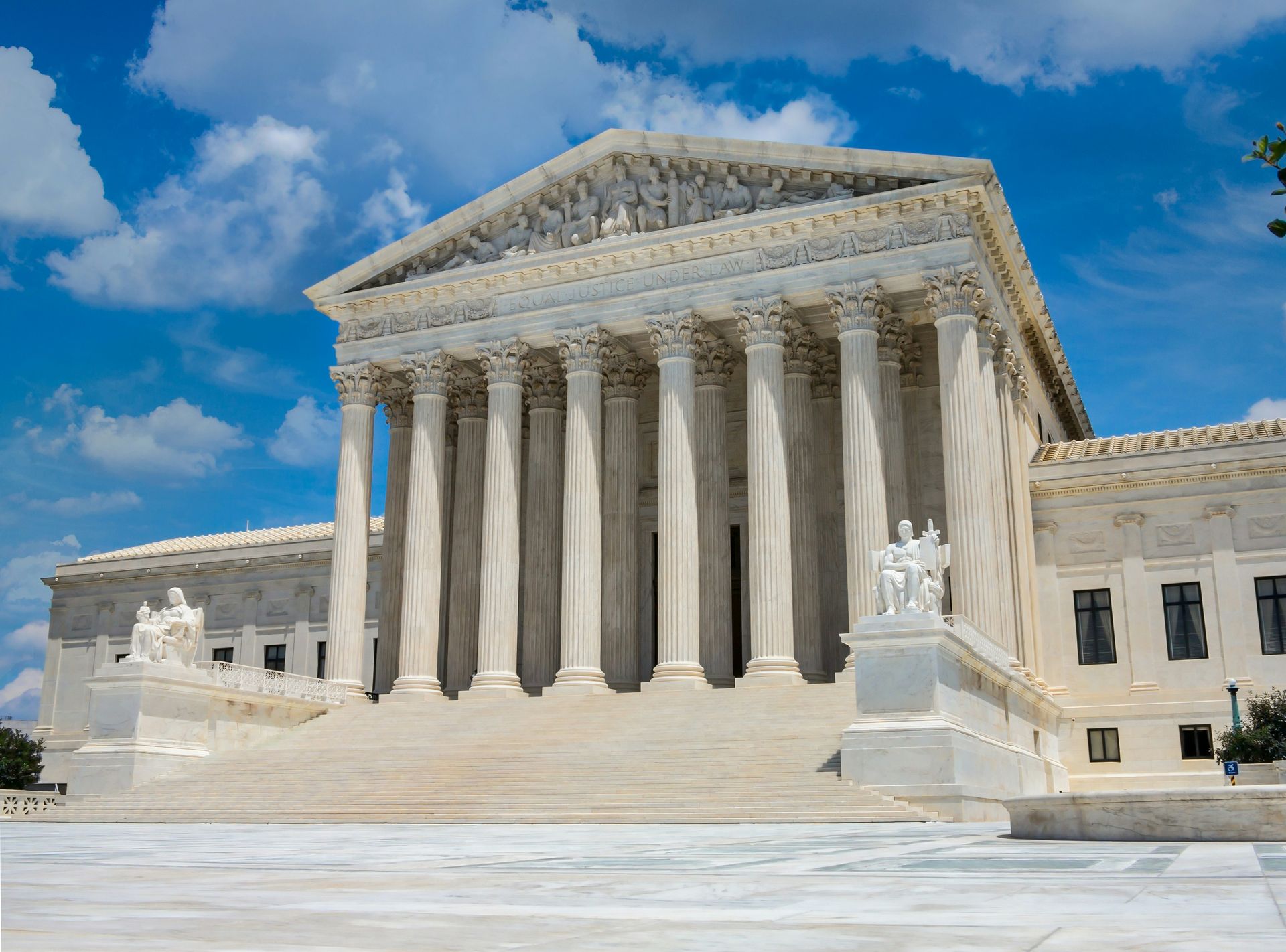
The Supreme Court is expected to rule on the constitutionality of IEEPA tariffs by June 2026
On May 28, 2025, the Court of International Trade ruled that the IEEPA tariffs were unlawful[10], finding that the President exceeded his authority by using emergency powers for general trade policy.
The U.S. Supreme Court agreed to hear consolidated cases challenging the tariffs, including Coalition for Prosperous America v. Trump and National Retail Federation v. United States. Oral arguments took place in June 2025, with a decision expected by June 2026.
Expert predictions
Trade and legal experts surveyed by JPMorgan estimated 70-80% odds that the Supreme Court will rule against the Trump administration's IEEPA tariffs[11]. The survey reflects widespread concern that using IEEPA for broad trade policy exceeds presidential authority.
The Brennan Center for Justice argues that "Congress designed both the National Emergencies Act and IEEPA to rein in the presidential use of emergency powers and to ensure they could not be used to displace non-emergency laws."[12]
What's at stake
American businesses have paid over $80 billion in duties under IEEPA tariffs. If the Supreme Court rules these tariffs unconstitutional, businesses that filed protests with Customs and Border Protection could recover those duties.
However, businesses have exactly 180 days from the liquidation date of each entry to file a protest. Miss this deadline and refund rights are lost forever, regardless of the Supreme Court's decision.
Sources
[1] America First Trade Policy, The White House, January 20, 2025
[2] Imposing Duties To Address the Flow of Illicit Drugs Across Our National Border, The White House, February 1, 2025
[2] Imposing Duties To Address the Situation at Our Southern Border, The White House, February 1, 2025
[4] Fact Sheet: President Donald J. Trump Imposes Tariffs on Imports from Canada, Mexico and China, The White House, February 2, 2025
[5] Further Amendment to Duties Addressing the Synthetic Opioid Supply Chain in the People's Republic of China, The White House, March 4, 2025
[6] Adjusting Imports of Steel Into the United States, The White House, March 12, 2025
[7] Adjusting Imports of Aluminum Into the United States, The White House, March 12, 2025
[8] Adjusting Imports of Automobiles and Automobile Parts Into the United States, The White House, March 26, 2025
[9] Regulating Imports with a Reciprocal Tariff, The White House, April 2, 2025
[10] IEEPA Tariffs on Canada, China, Mexico, Venezuelan Oil, STR Trade, accessed October 2025
[11] Trade and legal experts see up to 80% odds that the Supreme Court will rule against Trump's global tariffs, Fortune, October 4, 2025
[12] IEEPA Authorization of Tariffs Litigation, Brennan Center for Justice, 2025
Preserve your refund rights
With billions in potential refunds at stake and protest deadlines approaching, Tariva helps businesses file protests and track deadlines automatically.